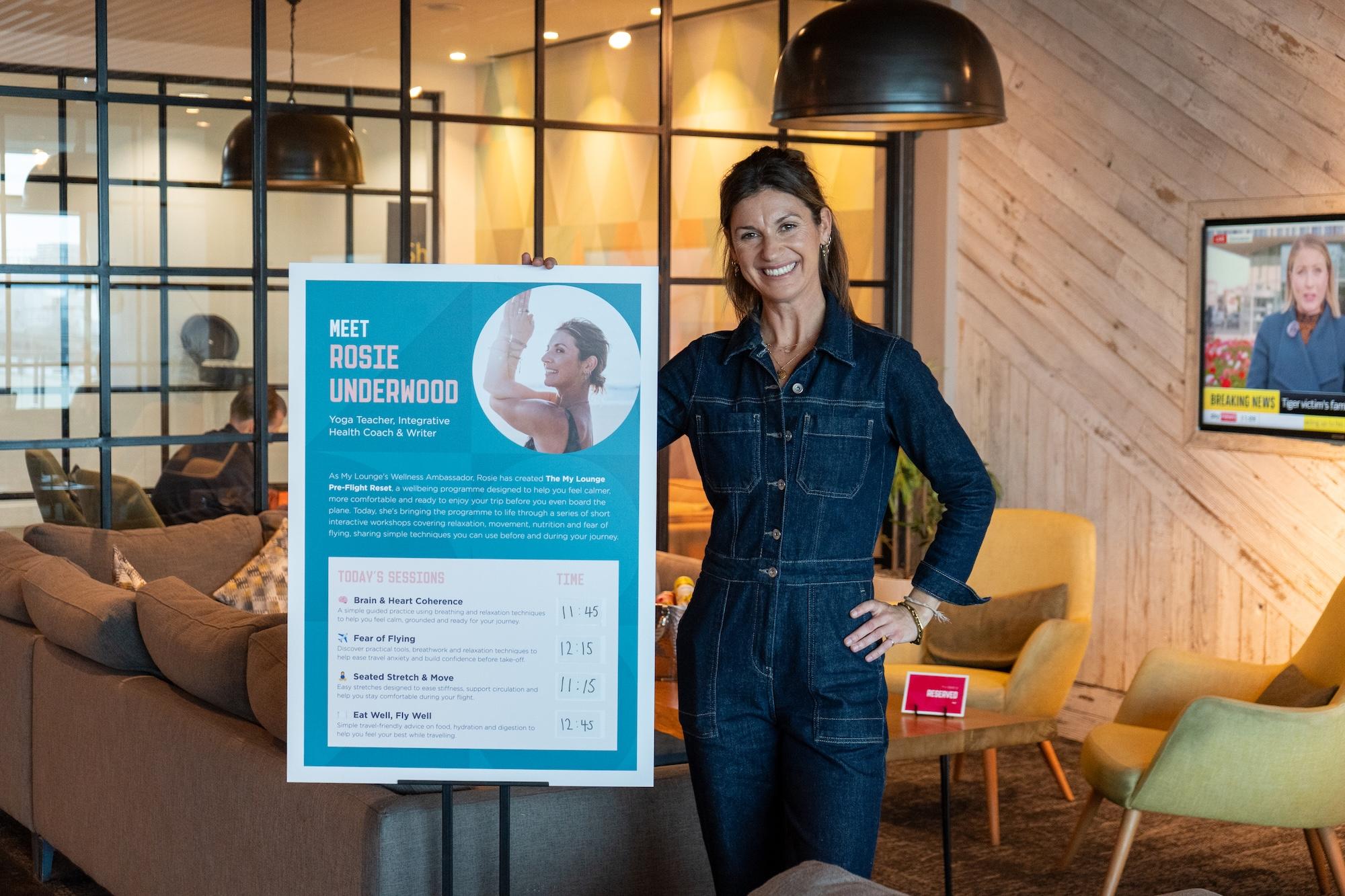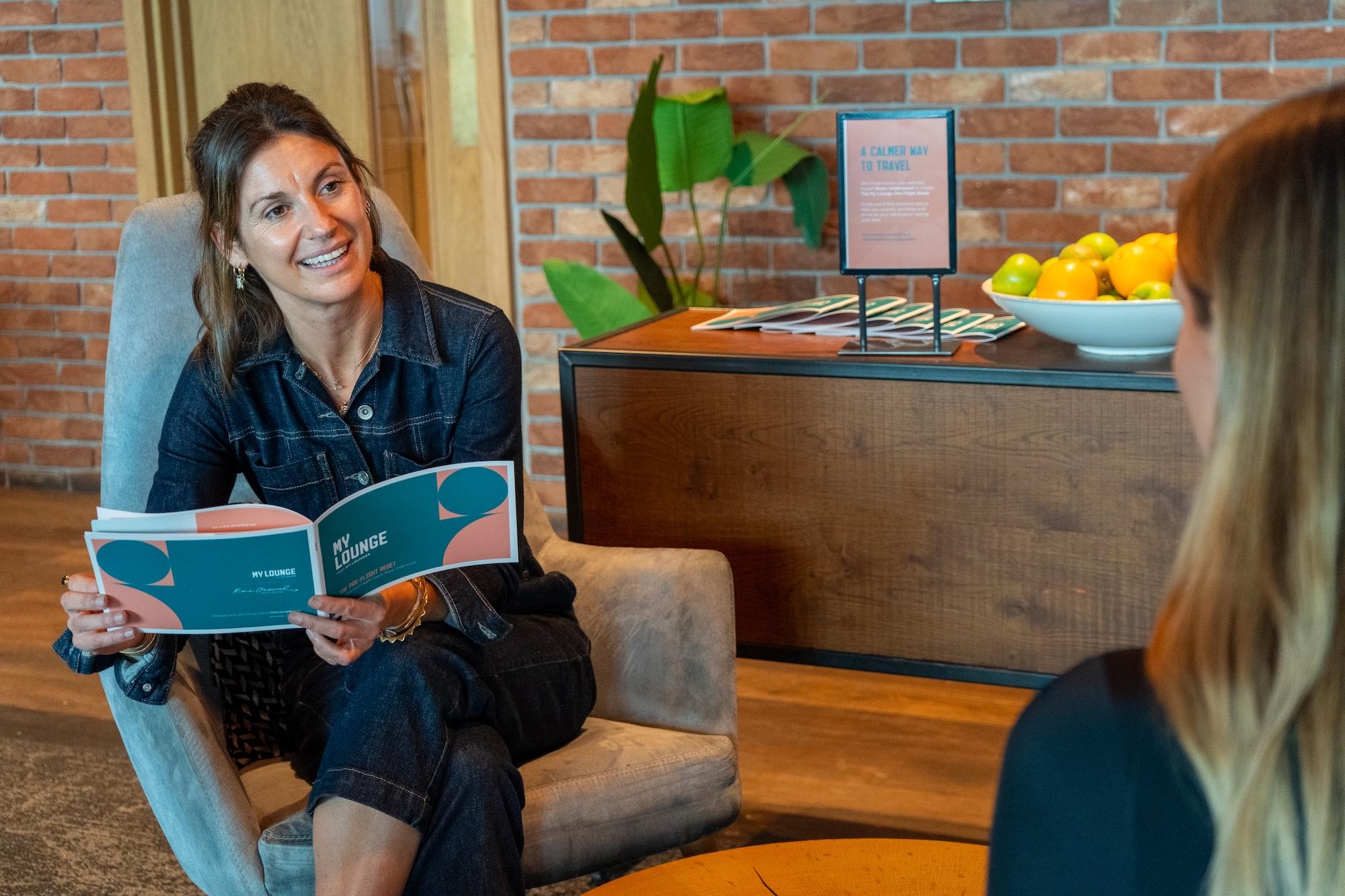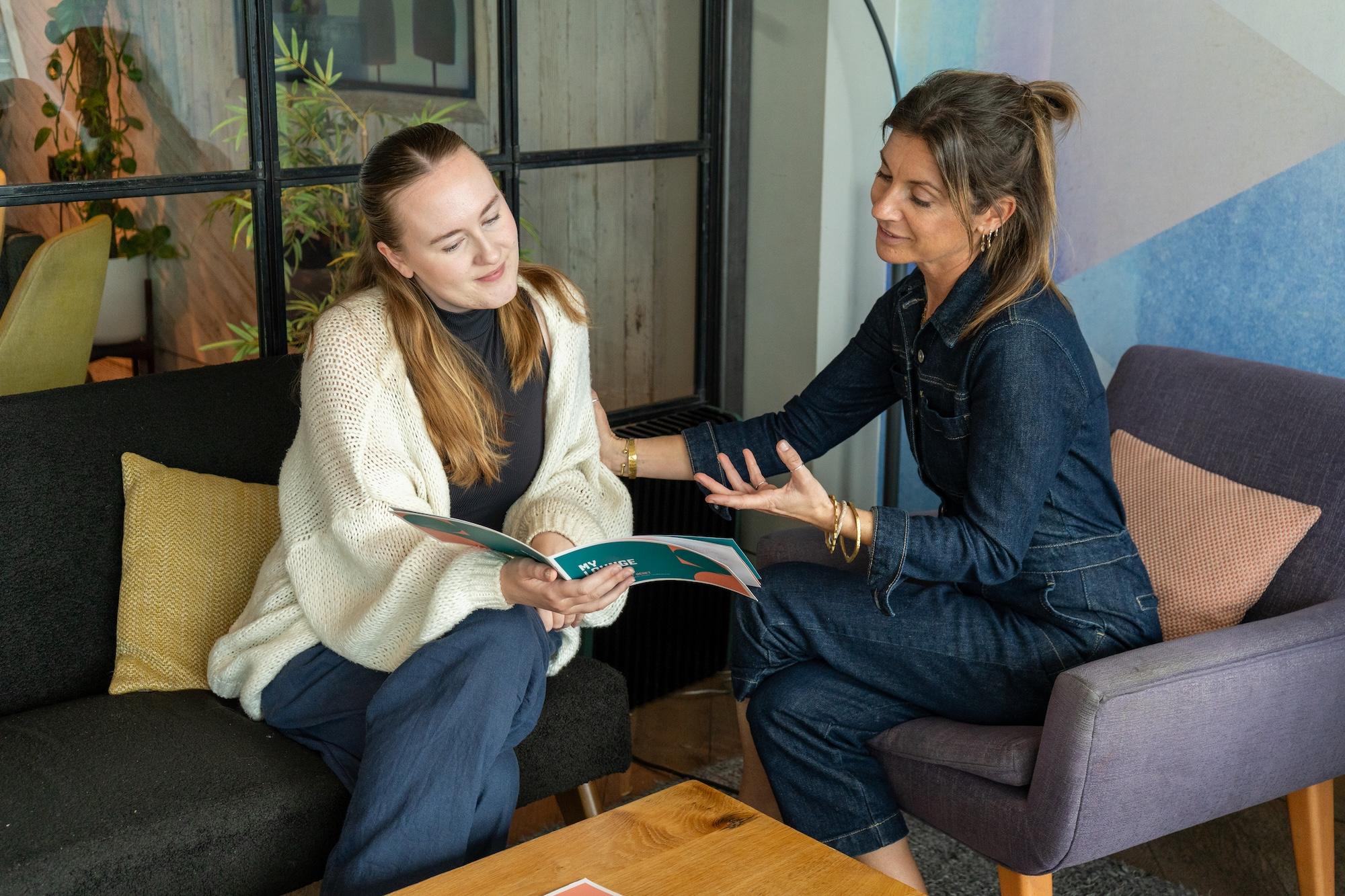
Meet Rosie Underwood
CALF RAISES

The calf muscles act as an important muscular pump for circulation in the lower legs. Slow calf raises wake them up and get them contracting.
ANKLE CIRCLES & ANKLE PUMPS
These mobilise the feet and ankles, which can spend long periods completely still when we're travelling.
GENTLE SQUATS
These recruit some of the body's largest muscle groups (the quads, hamstrings and glutes) getting blood moving and preparing the body to transition from sitting to moving.
HIP CIRCLES
Our hips remain flexed while we're sitting. Gentle circles take them through a greater range of movement and can help ease that familiar stiffness that comes from prolonged sitting.
THORACIC ROTATIONS
These gently mobilise the upper spine, particularly useful if you've spent time sitting at a desk, driving or looking down at your phone.
SHOULDER ROLLS
Travelling can create a surprising amount of physical tension. We often unconsciously lift our shoulders when we're stressed, so slow shoulder rolls give the body an opportunity to soften.
WALKING
Perhaps the simplest one of all. Walk around the lounge, rather than remaining seated until boarding. A few minutes of walking gets the legs working and breaks up prolonged stillness.
BREATHING TECHNIQUES TO DOWN REGULATE THE STRESS RESPONSE

Firstly just notice your breath.
Taking your awareness to the expansive and ascending quality of your inhale, the grounding and releasing quality of your exhale, and even noticing the little pause when the breath exchanges from inhale to an exhale, and exhale to inhale. This alone is a powerful rest for the nervous system. Simply noticing the breath, make sit become deeper. The body knows!

Then try something a little deeper if it calls you.
Inhale gently for 4. Exhale slowly for 6. Repeat for 2-3 minutes. The goal isn't to take enormous breaths or force yourself to relax. It's simply to make the exhale a little longer and softer than the inhale. This communicates to the brain that you're safe from 'danger'. We're not trying to force the body to relax. We're giving it information that, in this moment, you're safe enough to soften. You can also use the physiological sigh as a quick tool when you suddenly feel overwhelmed. Just two gentle inhales through the nose followed by one long, slow exhale


Firstly just notice your breath.
Taking your awareness to the expansive and ascending quality of your inhale, the grounding and releasing quality of your exhale, and even noticing the little pause when the breath exchanges from inhale to an exhale, and exhale to inhale. This alone is a powerful rest for the nervous system. Simply noticing the breath, make sit become deeper. The body knows!

Then try something a little deeper if it calls you.
Inhale gently for 4. Exhale slowly for 6. Repeat for 2-3 minutes. The goal isn't to take enormous breaths or force yourself to relax. It's simply to make the exhale a little longer and softer than the inhale. This communicates to the brain that you're safe from 'danger'. We're not trying to force the body to relax. We're giving it information that, in this moment, you're safe enough to soften. You can also use the physiological sigh as a quick tool when you suddenly feel overwhelmed. Just two gentle inhales through the nose followed by one long, slow exhale
ORIENT
Look around you and notice what's actually happening right now. "I'm sitting in the lounge. I can see the window. I can hear people talking. My feet are on the floor." This helps bring attention away from imagined future scenarios and back into the present moment.
Remember, you're not scared of the future, you're scared of what your mind is projecting into the future. What you're fearing isn't a truth, it's a projection.
GROUND
Feel your feet against the floor. Notice the support of the chair beneath you.
BREATHE
Slow the breath, lengthen the exhale and allow the jaw, shoulders and hands to soften. And perhaps most importantly, anxiety isn't necessarily a sign that something is wrong. It can simply be your body's alarm system becoming activated. Your feelings in this zone aren't always a correct indicator of your current reality. You don't have to fight the alarm. You can show your body that it doesn't need to stay at full volume.
BREATHE
Breathe in for a count of five, exhale for a count of five. Drop the counting. Take slow, comfortable breaths.
FOCUS
Bring your attention gently to the area around your heart If it feels comfortable place a palm to your heart
SHIFT
Think of something that naturally evokes appreciation, gratitude, love, calm or connection. It could be someone you love, a beautiful place, your dog, a memory, something you're looking forward to... it doesn't need to be profound. Then simply sit with that feeling while maintaining your steady breathing.
Then drop the visual, and notice how the feeling lingers. We're not pretending everything is wonderful. We're deliberately giving the mind and body access to another emotional state.
Create a small transition ritual before boarding.

CLOSE THE LOOP
Write down anything you need to remember so your brain doesn't have to keep rehearsing it. Put your phone on Do Not Disturb. Take three slow breaths. Ask yourself "What can wait until I land?"

CHOOSE AN INTENTION FOR YOUR JOURNEY
Rest | Read | Connect | Be present | Do absolutely nothing. You don't have to fill every minute of travel with productivity.

CLOSE THE LOOP
Write down anything you need to remember so your brain doesn't have to keep rehearsing it. Put your phone on Do Not Disturb. Take three slow breaths. Ask yourself "What can wait until I land?"

CHOOSE AN INTENTION FOR YOUR JOURNEY
Rest | Read | Connect | Be present | Do absolutely nothing. You don't have to fill every minute of travel with productivity.
BEFORE YOUR FLIGHT:
If you know you're going to be travelling for several hours, aim for a meal that is nourishing, familiar and easy to digest.
THINK:
- A good source of protein
- Cooked vegetables
- A moderate amount of healthy carbohydrate
- Healthy fats
- Plenty of fluid
You don't need to eat an enormous meal before boarding Comfortable and satisfied is the goal. If you're prone to digestive discomfort when travelling, this probably isn't the moment to experiment with lots of unfamiliar foods or a very heavy meal.
Ginger tea or mint tea as a digestive aid before you fly can be very helpful.
DURING THE FLIGHT:
The cabin environment, altered routine and prolonged sitting can contribute to feelings of bloating, fullness and sluggish digestion. As we're often less active while flying, it can be helpful to do the following.
THINK:
- Eat slowly Give your body time to register the meal rather than rushing through it.
- Stay hydrated Sip water regularly rather than waiting until you're thirsty
- Try not to watch anything disturbing whilst eating Movies can put your body into the stress response (for example Mission Impossible) This kind of stress response can stops your stomach from working well, which can lead to cramps or nausea. Stress and digestion by definition don't make good companions.
AFTER YOUR ARRIVE:
Don't underestimate the value of a simple, grounding meal after a long journey. If you've crossed time zones, your body is already adjusting to a new rhythm. Rather than immediately eating a huge or very rich meal, consider something warm, nourishing and familiar.
THINK:
- Warm + Simple + Nourishing + Easy to digest
- And then, if possible, take a gentle walk after eating rather than going straight from the plane to bed
My Lounge x Rosie Underwood Wellbeing Launch